 🚀
🚀Professional Summary
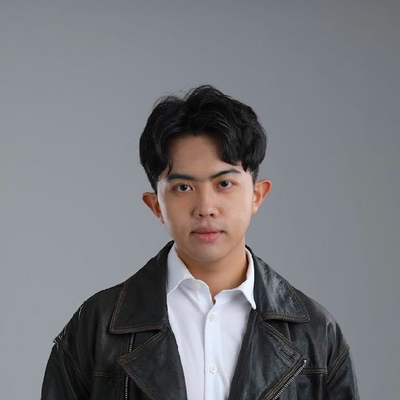
I am a fifth-year Ph.D. candidate in Biostatistics at Columbia University, advised by Dr. Qixuan Chen. I also work closely with Dr. Liangyuan Hu at Rutgers University. I received my M.S. in Biostatistics from Columbia University in 2022 and my B.E. in Computer Software Engineering from Xiamen University in 2019.
My research focuses on developing Bayesian methods and computational tools in three connected directions: Bayesian data integration across heterogeneous health data, missing data and causal inference, and AI for statistics. Across these directions, I develop methods motivated by practical problems and emphasize software that other researchers can use and adapt directly.
I am on the 2026–2027 academic job market. My CV is available here.
Education
Ph.D. in Biostatistics (expected May 2027)
Columbia University
M.S. in Biostatistics
Columbia University
B.E. in Computer Software Engineering
Xiamen University
Interests
- Dec 2026 — Invited talk on AI4BayesCode at the Technology and Artificial Intelligence Learning Seminar (TAILS), Montana State University (forthcoming).
- Aug 2026 — Invited talk on Bayesian propensity score predictive inference at the SILVER Lab Meeting, Department of Epidemiology and Public Health, University of Maryland School of Medicine.
- Aug 2026 — Our Bayesian MI-LASSO paper won the Student Paper Competition Award of the ASA GSS/SRMS/SSS Sections at JSM 2026, where I also chaired the session Sampling, Weighting, Missing Data and Variance Estimation.
- Aug 2026 — AI4BayesCode received a Paper Award at STAI-X 2026 (one of 9 awards selected from all 54 accepted papers) and was invited for a live demonstration at the Stats Up AI community table at JSM 2026.
- Jun 2026 — Received the Outstanding Doctoral Teaching Assistant Award from the Department of Biostatistics, Columbia University.
- Jun 2026 — Presented a poster at the IMSI workshop New Horizons on Model Transportability and Data Integration (Chicago, IL) with a travel award.
- Mar 2026 — Contributed talk at ENAR 2026 (Indianapolis, IN) on generalizing treatment effects from trials to EHR populations.
Student Paper Competition Award, ASA GSS/SRMS/SSS Sections
Paper Award, STAI-X
Outstanding Doctoral Teaching Assistant Award
Travel Award, IMSI Workshop on New Horizons on Model Transportability and Data Integration
Travel Award, 14th International Conference on Bayesian Nonparametrics
Programmed data processing modules in C++.